
Wildlife photography gear guide
Canon RF 100–400mm vs. 100–500mm for Wildlife Photography
Two lenses for Canon EOS R cameras, and how to tell whether the extra reach is worth carrying.
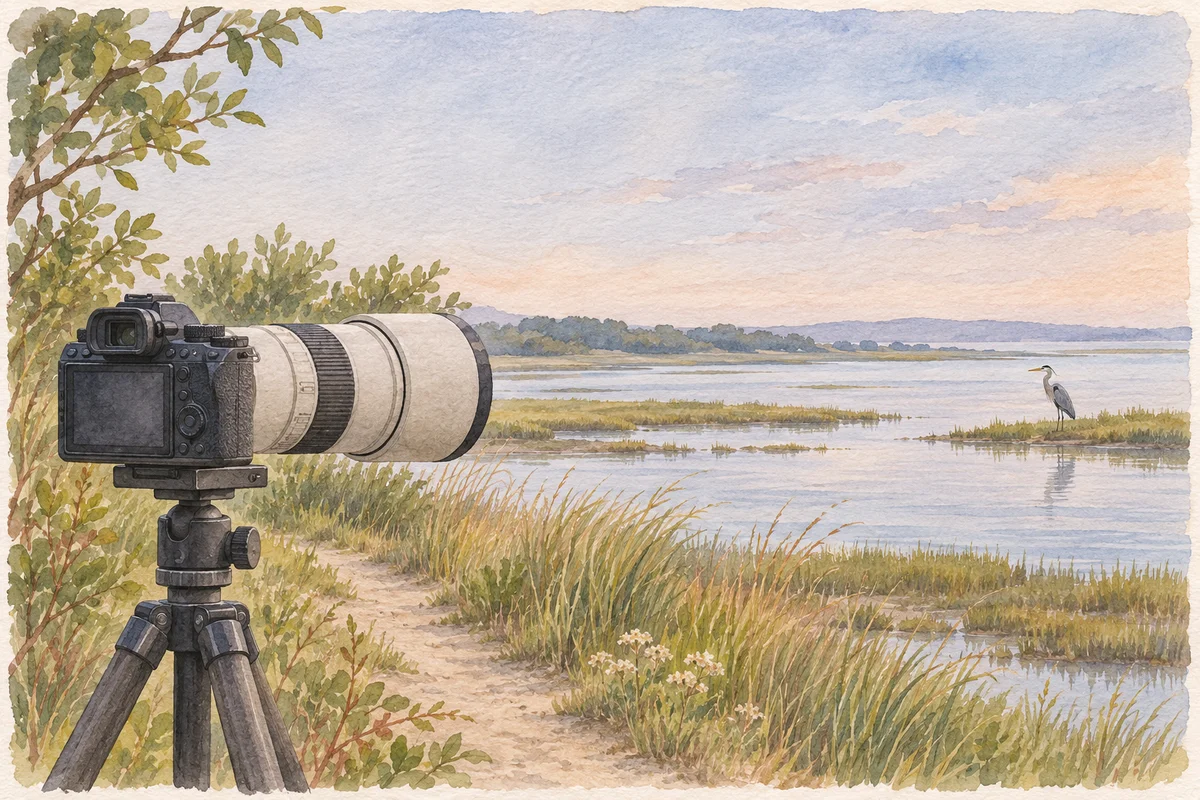
A heron across a tidal creek looks bigger through a 500mm lens than a 400mm lens. That extra reach comes with a real cost in money and weight. If you’re walking trails and photographing whatever shows up, I’d start with the Canon RF 100–400mm. If you repeatedly photograph distant birds from the same overlook and crop heavily, the RF 100–500mm L is worth renting for a morning.
Compare the two lenses
| Lens | Maximum aperture at the long end | Lens weight | B&H price checked November 13, 2026 |
|---|---|---|---|
| Canon RF 100–400mm f/5.6–8 IS USM | f/8 at 400mm | About 635 g | $749 |
| Canon RF 100–500mm f/4.5–7.1 L IS USM | f/7.1 at 500mm | About 1,365 g without tripod collar | $2,899 |
Both lenses mount on Canon EOS R-series cameras. Check the exact mount before shopping, especially if you use a Canon DSLR or an EOS M camera. The prices above are B&H snapshots and can change. Canon 100–400mm specifications · Canon 100–500mm specifications · B&H 100–400mm · B&H 100–500mm
Choose the 100–400mm for walking and daylight
The lighter lens makes sense for a walk where you might photograph a bird on a branch, a turtle on a log, and a heron fishing farther out. Start zoomed out when a bird is moving. Find it first, then zoom tighter once you’ve got it in the frame. At 400mm, the f/8 maximum aperture can push your ISO higher if you need a fast shutter speed in shade.
Try the 100–500mm when distance keeps costing you shots
From the same position and on the same camera, a distant bird projects about 25% larger in each dimension at 500mm than at 400mm. That helps when you’re already cropping hard and the bird is still too small in the finished image. The longer lens also weighs more than twice as much. Try carrying it for as long as a typical outing and see how steady you feel picking it up repeatedly.
Run one test before deciding
Rent or borrow the longer lens, then photograph the same distant subject at 400mm and 500mm without moving closer. Keep the camera and shutter speed the same, and compare crops at the size you actually share or print. Then try following a moving subject with each lens. If the extra detail repeatedly makes a difference and the weight feels manageable, you have a reason to upgrade. For a bird whose behavior changes when you get closer, stay where you are and work with the view you have.
Check the exact models
As an Amazon Associate I earn from qualifying purchases.
- View the Canon RF 100–400mm on Amazon (paid link)
- View the Canon RF 100–500mm L on Amazon (paid link)
Explore more Wild Notebook field guides
For a closer look at professional 600mm and 1200mm primes, compare three lenses for bird photography.