
Book companion / Mid-Atlantic yards

Habitat book: recommended materials

Your shopping companion for Wild Notebook: Build a Backyard Habitat. Choose the same project code you see in the book to find supplies, buying criteria, and retailer search phrases.

Start with your site and your plan. Gather what you need, share tools across projects, and keep useful items you already own.

By Jeremy L. Koering · Updated November 5, 2026

Choose your project

View the hardcover on Amazon (paid link) →

As an Amazon Associate I earn from qualifying purchases.

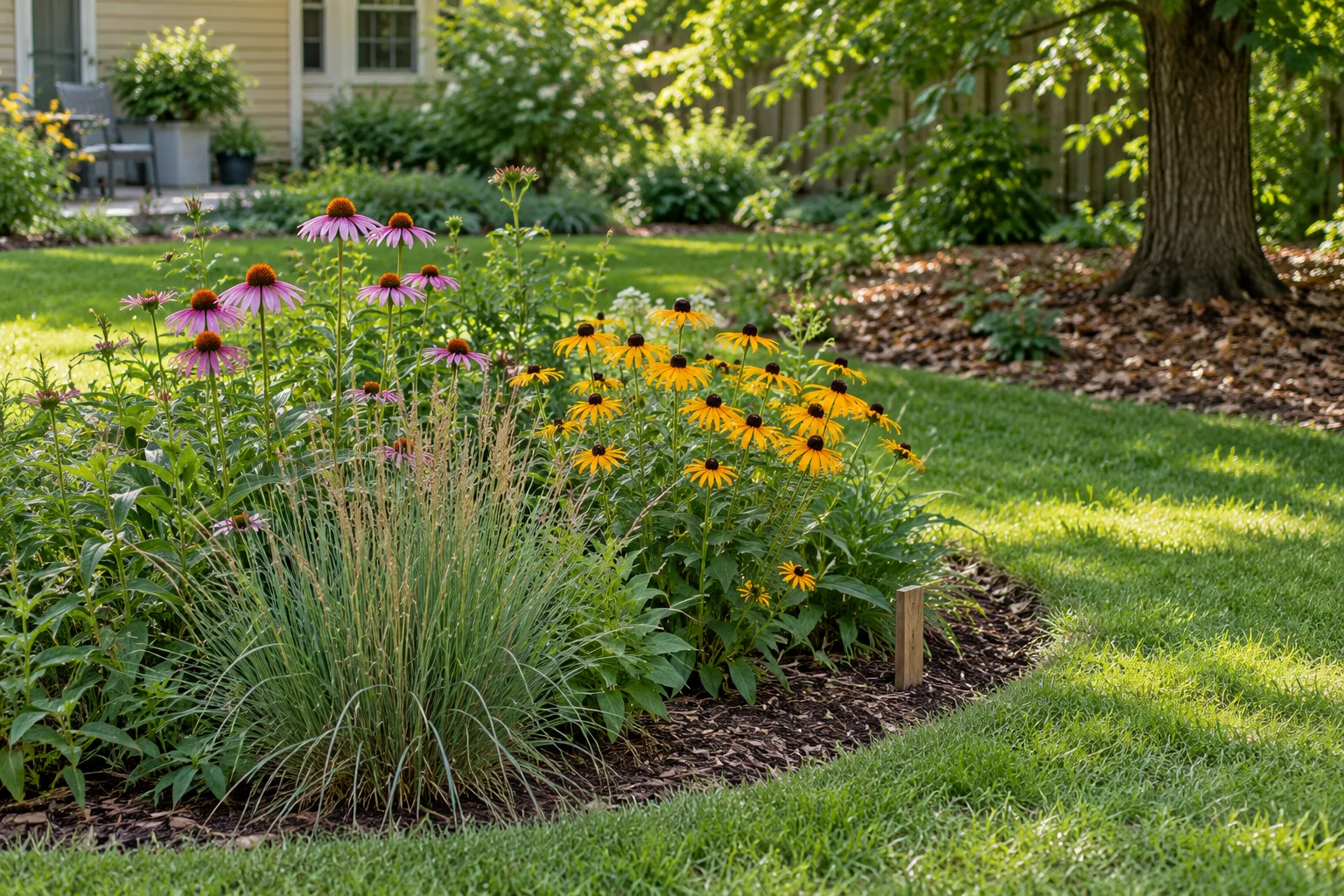
Concept illustration of a small native planting patch in a usable backyard
A manageable patch is a useful beginning. Concept illustration; the pictured plants are not a planting prescription.

Choose where to shop

Use the Amazon search links below, or copy a supply’s search phrase, open a retailer homepage, and paste it into the search field. Add the size or specification from your project plan before choosing an item.

For native plants, use the exact botanical names from your selected planting plan and ask a local native-plant nursery about suitability and sourcing. A retail “native” or “pollinator” label alone is not enough.

Before you fill a cart

  1. Choose one project and read its preparation and care instructions.
  2. Mark the footprint, confirm the site, and reconcile plant or material quantities.
  3. Check the shed, ask about borrowing, and compare local sources.
  4. Buy only the items that fit the checked plan. Optional items can stay optional.

New to habitat gardening? Start with our rewilding guide. Or download the free two-page planning worksheet.

Choose your project

Choose a project to narrow the list. Mark items you already have, can borrow, or have otherwise arranged.

Checkmarks stay in this browser when browser storage is available.

Reusable basics

For planting projects, start with what is already in the shed.

One, if needed

Measuring tape

Look for: A readable tape long enough for the footprint and access clearances. Measure the actual site; do not scale from a book illustration.

Reuse, borrow, or buy locally: Reuse or borrow a tape. A short ruler is also useful for basin depth.

P1 · P2 · P3 · P4 · P5 · P6 · P7 · P8 · P9 · P10 · B1Compare on Amazon (paid link): measure

One suitable pair

Work gloves

Look for: Choose a secure fit and protection suited to soil, rough material, and the work you will actually do.

Reuse, borrow, or buy locally: Use a pair you already own if suitable.

P1 · P2 · P3 · P4 · P5 · P6 · P7 · P9 · P10 · B1Compare on Amazon (paid link): gloves

One, shared across projects

Hand trowel

Look for: A sturdy head and comfortable grip for small planting holes. Larger root balls require different tools.

Reuse, borrow, or buy locally: Borrow a trowel; avoid buying a large tool set for a few small plants.

P1 · P2 · P3 · P4 · P5 · P6 · P7Compare on Amazon (paid link): trowel

Conditional; borrow first

Digging spade

Look for: For the selected preparation or excavation method. Check services and roots before digging; difficult ground may need professional help.

Reuse, borrow, or buy locally: Borrow or rent appropriate tools. Not every preparation method needs a new spade.

P1 · P2 · P3 · P4 · P5 · P6 · B1Compare on Amazon (paid link): spade

One working setup

Hose and gentle watering attachment

Look for: Measure the route from the tap, check fittings, and choose a controllable gentle flow for watering root zones.

Reuse, borrow, or buy locally: Test your existing hose. A watering can may suit a few pots.

P1 · P2 · P3 · P4 · P5 · P6 · P7 · P8Compare on Amazon (paid link): water

One label per recorded plant or group

Plant labels and weather-resistant marker

Look for: Keep scientific names and planting positions legible. Save supplier labels and record a map as backup.

Reuse, borrow, or buy locally: Reuse durable labels and the notebook or phone you already own.

P1 · P2 · P3 · P4 · P5 · P6 · P7 · B1Compare on Amazon (paid link): labels

Optional comfort item

Kneeling pad

Look for: A stable, comfortable pad for ground-level tasks. Choose what suits your mobility and work position.

Reuse, borrow, or buy locally: Use a suitable pad already at home or work from a different safe position.

P1 · P2 · P3 · P4 · P5 · P6 · P7 · P9Compare on Amazon (paid link): kneel

Plants, shrubs, and trees

Choose living plants locally, with the full identity and site requirements in hand.

From the checked plan

Locally appropriate plant stock

Look for: Confirm scientific name, local native occurrence, mature spread, stock size, growing conditions, and source information. Reconcile every position before ordering.

Reuse, borrow, or buy locally: Use a regional native-plant nursery or sale. Do not buy a generic wildflower mix as a substitute for a reviewed palette.

Find New Jersey native-plant nurseries (non-affiliate directory). Elsewhere in the Mid-Atlantic, use your state native-plant society and county extension service.

P1 · P2 · P3 · P4 · P5 · P6 · P7 · B1Local sourcing / reuse

Only if specified for the planting

Ground treatment or mulch

Look for: Calculate volume from the actual area and reviewed depth. Keep crowns, stems, and root flares appropriately clear.

Reuse, borrow, or buy locally: Compare local bulk or bagged sources. Dry-site plants and woody plants do not automatically need the same treatment.

P1 · P2 · P3 · P4 · P5 · P6Local sourcing / reuse

Only where the site needs it

Browsing or trunk protection

Look for: Select protection for the animal pressure and plant. Leave clearance from bark and growing branches; plan inspections and removal.

Reuse, borrow, or buy locally: Ask the nursery or extension service which protection fits the problem before choosing a product.

Container habitat

Three pots are the book’s starting arrangement; dimensions come from the selected plants.

Three separate pots for P7

Outdoor pots with working drainage

Look for: Check the inside dimensions, usable root volume, drainage outlet, stability, and suitability for your winter plan. In the P7 porch example, wild columbine and American alumroot each use a pot with an 18-inch internal diameter and 16-inch internal depth. Bluestem goldenrod uses a 20-inch internal diameter and 18-inch internal depth. Choose the plants first and treat these dimensions as specific to the example.

Reuse, borrow, or buy locally: Reuse suitable containers after inspecting and cleaning them.

Calculate after choosing the pots

Suitable container growing medium

Look for: Use a mix appropriate to the selected species. In the P7 porch example, leave about 2 inches of watering space below the rim and account for pot taper and root-ball displacement when measuring mix. Keep the drainage holes clear.

Reuse, borrow, or buy locally: A local garden center is useful for comparing mix composition and bag volumes.

Only if the drainage setup needs them

Pot feet or stable supports

Look for: Keep the outlet free and the pot stable. Do not create a saucer of stagnant water underneath.

Reuse, borrow, or buy locally: Reuse stable supports if they suit the pot and surface.

A clean-water birdbath

Simple equipment is useful only when routine care is practical.

One basin and a stable support if needed

Shallow, scrub-friendly basin

Look for: Check actual water depth: about 1 inch at the edges, sloping to no more than 2 inches in the center. Choose secure footing and a surface you can scrub.

Reuse, borrow, or buy locally: A suitable shallow basin you already own may work. A decorative pedestal is optional.

One brush

Dedicated basin brush

Look for: Choose bristles and a shape that reach the basin’s surfaces without damaging them. Store cleaning supplies separately and rinse the basin thoroughly.

Reuse, borrow, or buy locally: Use an appropriate dedicated brush you already own.

An overwintering refuge

Keep the useful material you already have.

No purchase usually needed

Existing leaves, stems, and stable wood

Look for: Retain suitable material in a defined area, clear of the route. Avoid diseased or invasive material and unstable piles.

Reuse, borrow, or buy locally: Use your own suitable leaves and standing stems. Do not collect habitat material from natural areas.

P9Local sourcing / reuse

A nest box that fits the bird

Choose the species and verified plan before choosing a box.

One only after the site qualifies

Species-specific nest box

Look for: Match the entrance and interior dimensions to the species plan. Look for untreated durable wood, a rain-shedding roof, ventilation, drainage, a roughened interior, and a panel that opens for monitoring and cleaning. Skip exterior perches and use the placement specified by the plan.

Reuse, borrow, or buy locally: Build from an authoritative plan or buy from a specialist who provides the full specification.

Start with NestWatch’s Right Bird, Right House (non-affiliate). A search result is not certification that a box matches the plan.

A matched mounting system

Compatible pole and predator guard

Look for: Match pole diameter, mounting method, guard clearances, and monitoring access to the chosen plan. Do not assume any baffle fits any pole.

Reuse, borrow, or buy locally: A local birding supplier can help assess compatible parts.

The wildlife pond bonus

These are design-dependent purchases, not a universal pond kit.

Only after the pond plan is complete

Pond liner or suitable pond shell

Look for: Size from the full excavation profile and manufacturer’s edge allowances. Check suitability for the intended aquatic habitat, support, and anchoring method.

Reuse, borrow, or buy locally: A pond specialist can review dimensions and materials before you order.

Circulation is optional for this fish-free project. If selected, match the pump and protected intake to the design; do not buy equipment solely from a generic kit list.

If required by the chosen system

Compatible liner underlayment

Look for: Follow the liner manufacturer’s specification and quantity calculation. Do not substitute sharp or unsuitable material beneath the liner.

Reuse, borrow, or buy locally: Buy locally with the liner when that makes compatibility easier to confirm.

Conditional; monitoring comes first

Bti mosquito-larvae control

Look for: Summit Mosquito Dunks are one example to compare. Select a product labeled for the site, follow its dose and retreatment directions, and seek county mosquito-control advice for persistent breeding. It is not an algae treatment.

Reuse, borrow, or buy locally: Check the current product label and local mosquito-control guidance. This is not a recommendation for automatic treatment.

Manufacturer’s product information and label · EPA’s Bti guidance (non-affiliate).

A few purchases to pause on

Plants and seed mixes: confirm each species and local suitability. A “pollinator” label does not establish that every ingredient belongs at your site.

Tree stakes, fertilizer, and extra mulch: buy them only when the assessed planting needs them. They are not automatic additions to every planting hole.

Pond fish, tadpoles, and frogs: these are not supplies for the fish-free wildlife pond. Let suitable wildlife arrive naturally. Keep household access protection, water-source preparation, and seasonal care in the plan.

Extra features: a fountain is not a replacement for cleaning a birdbath or monitoring a pond. More equipment also means more equipment to maintain.

Guidance behind the buying criteria

These are independent resources, not endorsements of Wild Notebook or of the products in a retailer’s search results.

Keep the project useful

The care plan belongs on the list, too.

Budget time for establishment water, inspections, cleaning, and seasonal decisions. A project that fits your routine is easier to keep working.

Backyard rewilding guide · More habitat activities · Outdoor crafts and future projects on Pinterest