
Wild Notebook · Indoor growing
How to Care for Carnivorous Plants at Home
By Jeremy L. Koering
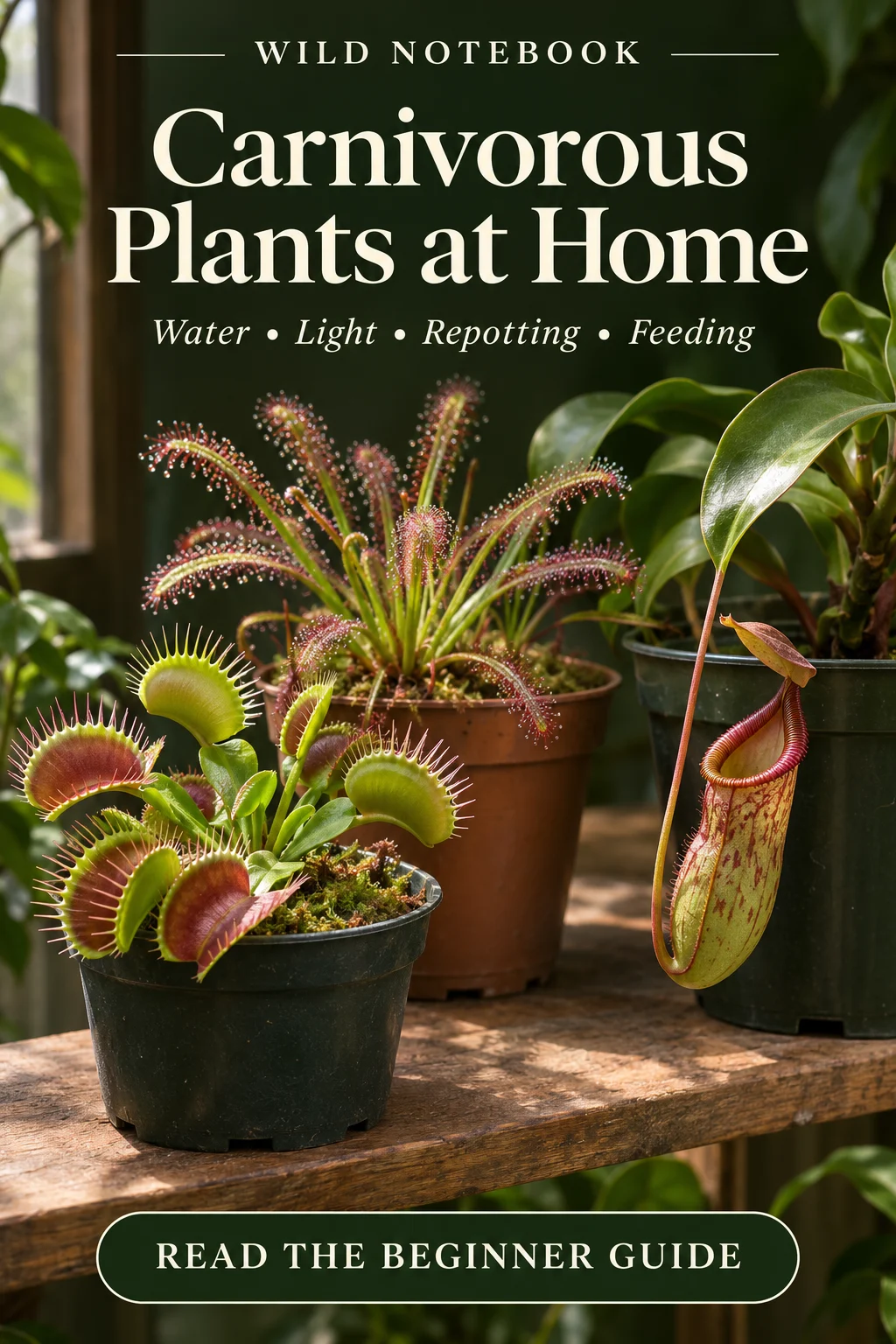
A flytrap snaps shut. A sundew holds prey on sticky droplets. A tropical pitcher plant lures insects into a leaf shaped like a cup. People grow these plants to watch those adaptations up close. They make a small windowsill or grow shelf a place to notice something new, though you’ll still need to address the source of any indoor pest problem.
Start with a Cape sundew if you want an indoor plant. A Venus flytrap is a better choice if you can provide strong light and a cool winter rest. A beginner Nepenthes hybrid is another indoor option if you have bright light, warmth, and enough room for a climbing plant.
Give each plant the conditions it needs
Start with distilled or reverse-osmosis water. Clean rainwater is another option. Bottled spring or mineral water can contain dissolved salts, and an ordinary pitcher filter may leave those minerals behind. All three plants need light to grow. Their prey supplements nutrients.
- Venus flytrap (Dionaea muscipula)
- Give it strong light. An outdoor spot with direct sun is often easier than a typical windowsill. Acclimate a newly purchased plant gradually to stronger sun. During active growth, a shallow tray of low-mineral water can keep the medium moist. Plan for a cool winter dormancy and keep the medium damp with less standing water. In colder climates, ask the grower how to protect a small pot from prolonged hard freezes.
- Cape sundew (Drosera capensis)
- Give it a bright window or a grow light and keep its medium moist with a shallow tray of low-mineral water. This species can grow year-round indoors in suitable conditions. Other sundews may need different seasonal care. Fresh sticky droplets on new leaves are a useful sign to watch for as it settles in.
- Tropical pitcher plant (Nepenthes)
- Start with a nursery-recommended hybrid and follow its temperature and humidity needs. Give it bright, filtered light, warmth appropriate to that hybrid, and airflow. Water from the top, let the pot drain, and keep the medium lightly moist. Keep its pot out of standing water. A newly moved plant can lose old pitchers. Watch whether healthy new leaves form pitchers once conditions stabilize.
What to do when you bring it home
Check the species label, drainage holes, growing medium, and any instructions from the seller. A healthy potted plant in suitable medium can usually settle in its nursery pot. Repot sooner if it arrives bare root or is sitting in ordinary fertilized soil. For an established flytrap that simply needs more room, the end of winter dormancy is a good time.
- Choose a clean plastic pot with drainage holes. Give flytrap roots depth and size a Nepenthes pot for its root mass.
- Moisten the right mix with distilled or reverse-osmosis water. Use a fertilizer-free carnivorous bog mix for a flytrap or Cape sundew, such as plain sphagnum peat with plain perlite. Use a loose, airy mix for Nepenthes, such as long-fiber sphagnum with plain perlite. Check the label for added fertilizer.
- Slide the root ball out gently. Keep it intact if the old mix is suitable. If you need to remove unsuitable soil, ease it away carefully and rinse with low-mineral water as needed. Handle roots gently and keep them moist while you work.
- Set the plant at its previous depth and keep the growing point exposed. Settle the mix with low-mineral water and let it drain. Resume the watering routine for that species and give it time to establish before offering food.
How to feed it when your home has few insects
If the plant catches insects on its own, skip hand-feeding. If it catches none, offer a small portion to a healthy, actively growing plant. Start with one trap, leaf, or pitcher at a time and see how it responds over the next week or two. Skip feeding a dormant flytrap.
- Venus flytrap: Offer one small live insect from a feeder culture, sized at about one-third of the trap or smaller. For a dead insect or a small piece of plain freeze-dried bloodworm, moisten it first and gently stimulate the trigger hairs with tweezers. Once the trap closes, a gentle massage from the outside can mimic prey movement and help it seal. If it won’t seal, leave it alone and try another day.
- Cape sundew: Set a fruit fly or a tiny crumb of plain freeze-dried bloodworm onto a sticky leaf with tweezers. A single small piece is enough for a first feeding. Reduce the portion if food molds or leaves blacken around it.
- Nepenthes: Drop one small insect or a tiny amount of plain insect food into an open pitcher with its own fluid. Start with one pitcher. Leave unopened and dried-out pitchers alone.
Cultured flightless fruit flies are useful for small traps and sticky leaves. Choose feeder insects sized to the plant and avoid prey from areas treated with insecticides.
Common mistakes to avoid
- Using ordinary potting soil, compost, fertilizer pellets, or mineral-rich water.
- Putting every plant in the same water tray. A bog plant and a tropical pitcher plant need different root conditions.
- Keeping a flytrap in a warm room year-round without a dormancy plan.
- Making traps close for fun or feeding them meat, cheese, or oversized insects. Save the demonstrations for actual feeding.
- Putting a sealed terrarium in direct sun or assuming humidity will make up for dim light.
Where to buy your first plant and supplies
Start with a specialist nursery that names the species or hybrid and explains its care. Ask whether the plant is nursery propagated and arrives potted or bare root. For an easier start, choose a healthy potted plant over a mystery seed kit. Leave wild plants where they grow.
- California Carnivores · Specialist nursery with plant-specific care instructions.
- Carnivorous Plant Nursery · Specialist nursery where you can compare named plants and growing supplies.
The nursery links are non-affiliate. As an Amazon Associate I earn from qualifying purchases. The paid links below open searches. Check each listing for the right ingredients or size.