
When should I water my bonsai?
Check the soil today. Water only if the tree needs it. A shallow pot can dry quickly, but that doesn’t mean it needs a drink on a fixed schedule.
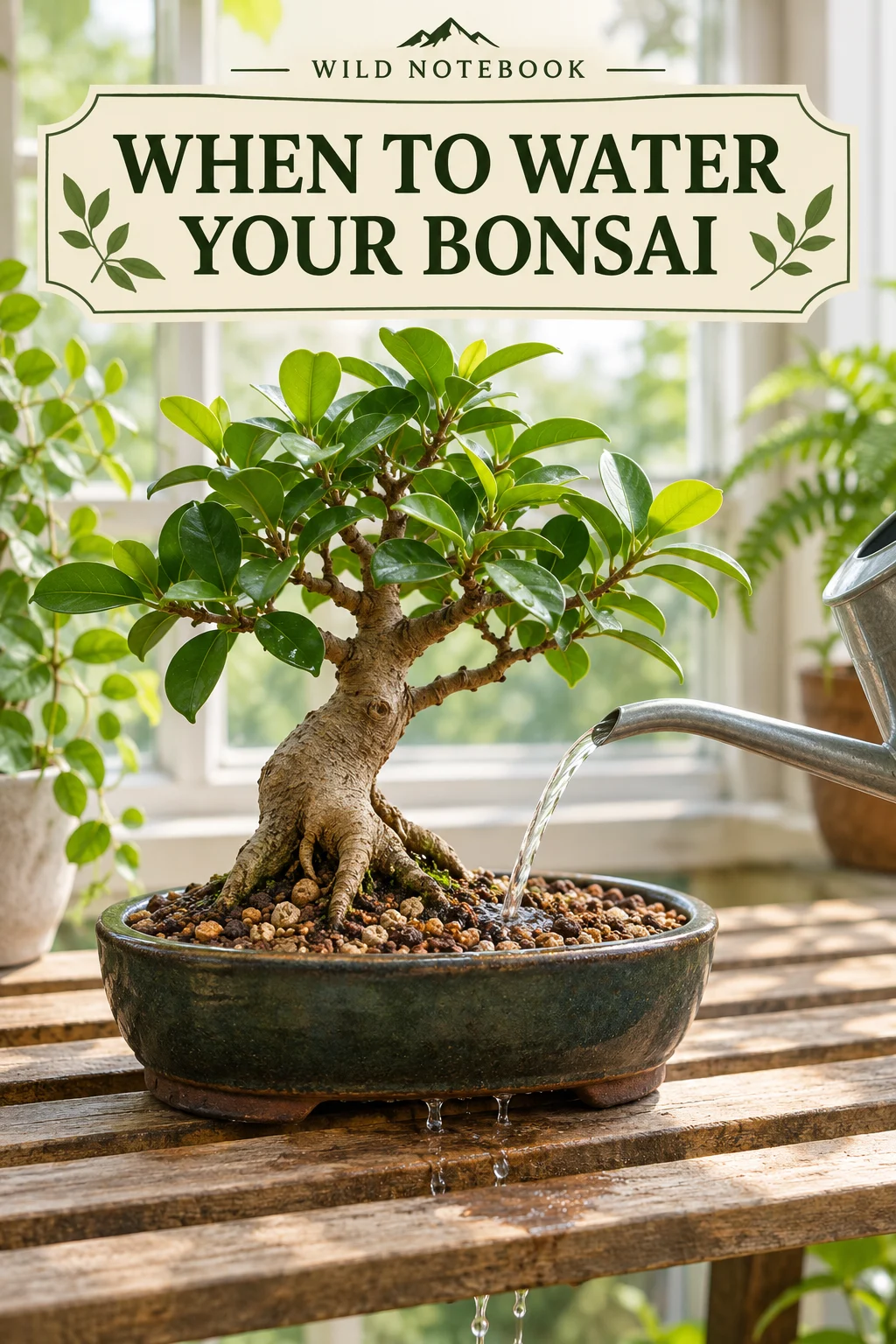
Check below the surface
Feel the soil just below the surface in a couple of places. If it still feels moist, wait and check again later. If the upper layer is starting to dry, it’s generally time to water; don’t wait until the whole root ball is dry. Learn what your tree’s soil feels like just after watering and as it dries.
Water the whole pot, then let it drain
- Use a gentle stream over the whole soil surface. A sink or an outdoor spot where water can drain works well.
- Keep watering until water runs from the drainage holes. If it rushes out immediately while the soil still feels dry, pause briefly, then make another slow pass.
- Let the pot finish draining. Empty any saucer or decorative outer pot before putting the tree back.
Check more often when conditions change
An indoor ficus near a bright window may dry at a different pace from an outdoor juniper in sun and wind. Check more often on hot or windy days. After rain, check the soil instead of assuming the pot got enough water.
Try this for a week: Check at roughly the same time each day and note whether the soil is moist or starting to dry. Record when you actually water. The pattern tells you more about your tree than a generic schedule.
When something looks wrong
If the tree looks stressed, check the soil and drainage first. Drooping or yellow leaves alone don’t tell you whether to add water. If the soil stays soggy or water won’t drain, check that the holes are open and ask a nursery or bonsai club about the potting mix before repotting.
Further reading: New England Bonsai Gardens’ temperate bonsai care guide.