You don’t have to see the deer to notice its visit.
Learn five signs to look for on your next walk: tracks, trails, droppings, rubs, and scrapes. Start with what you can see—and leave room for uncertainty.
By Jeremy L. Koering · Wild Notebook · For backyards and woodland edges in the Mid-Atlantic
Start with the tracksOne clue is a starting point. Several clues make a better case. In places where deer species overlap, signs alone may not distinguish white-tailed deer from other deer. These AI-generated illustrations show general features, not documented field observations. Use multiple signs and the descriptions below when identifying what you find.
Tracks: two halves of a hoof
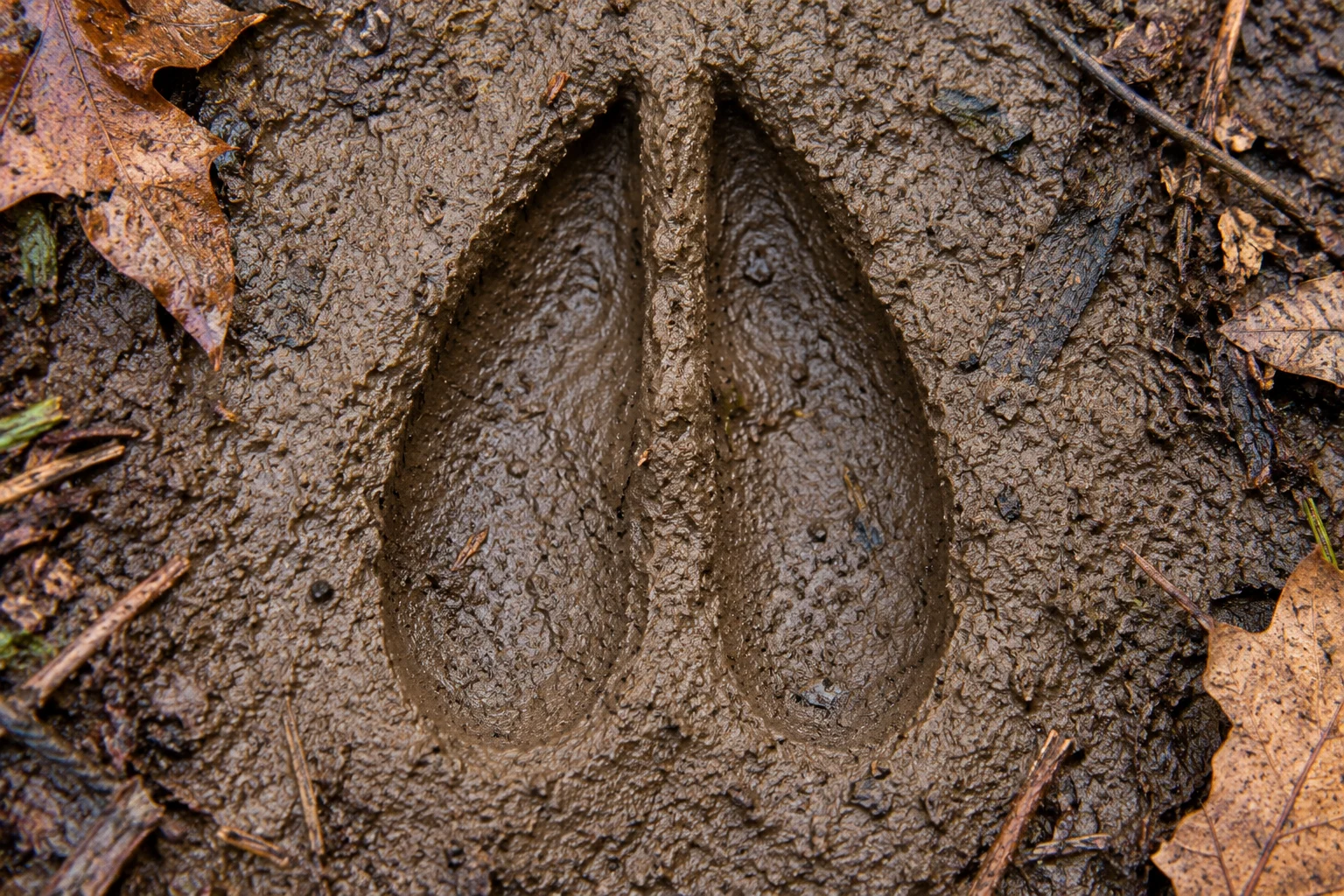
Look for paired, pointed hoof impressions. A clear print can resemble a narrow heart, with the pointed ends generally facing the direction of travel. Soft mud may also show the smaller dewclaws behind the main hoof marks.
What it cannot tell you: Compare several prints rather than trusting one blurred mark. Overlap, deep mud, and melting snow can distort the shape. A track alone is not a reliable way to identify a buck, doe, or exact age.
Trails: a route through cover
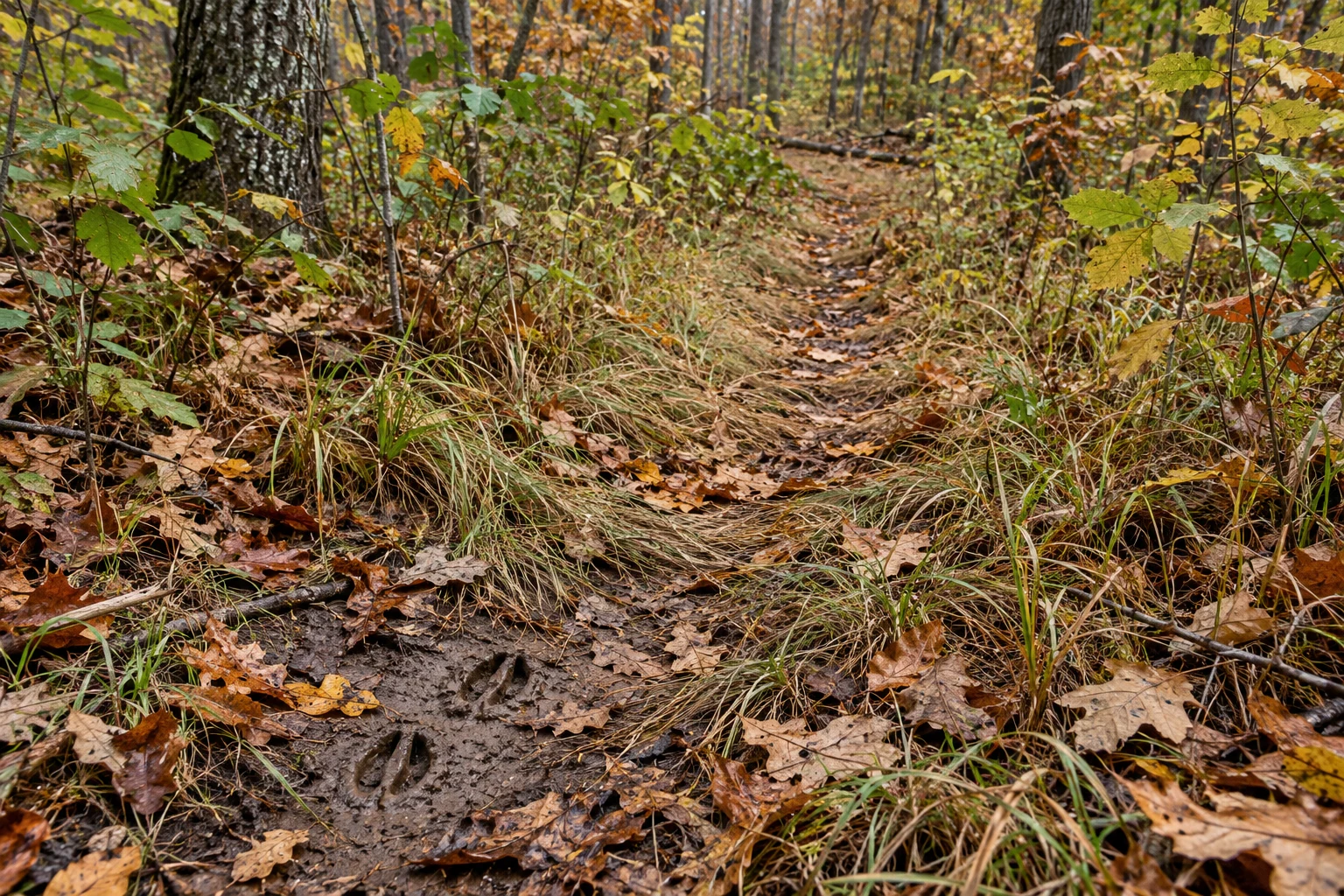
Look for a narrow, repeatedly used path through vegetation or along a woodland edge. Check muddy patches where a path crosses open ground: hoofprints make the deer connection much stronger.
What it cannot tell you: A path is a clue, not proof. People, pets, and other wild animals may use the same route. Observe from an established public trail instead of following an animal into cover.
Droppings: pellets on the ground
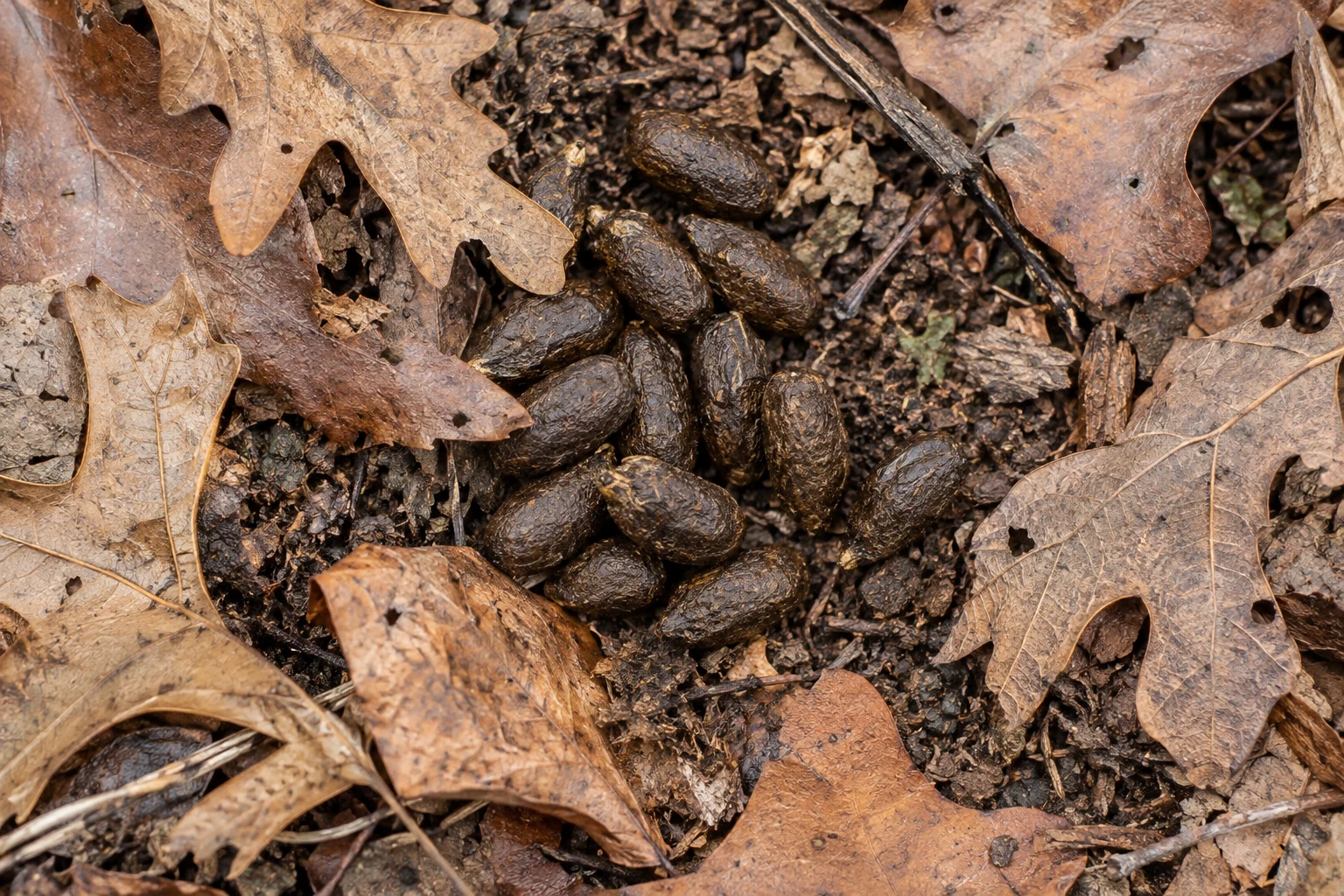
Deer droppings often appear as groups of small, oval pellets. Their form varies with diet and moisture, and pellets can sometimes clump together. Photograph what you find without handling it.
What it cannot tell you: Pellets alone may be confused with other animals’ droppings. Nearby deer tracks add context. Appearance is not a dependable clock: weather changes how quickly droppings dry and break down.
Rubs: bark worn away on a woody stem
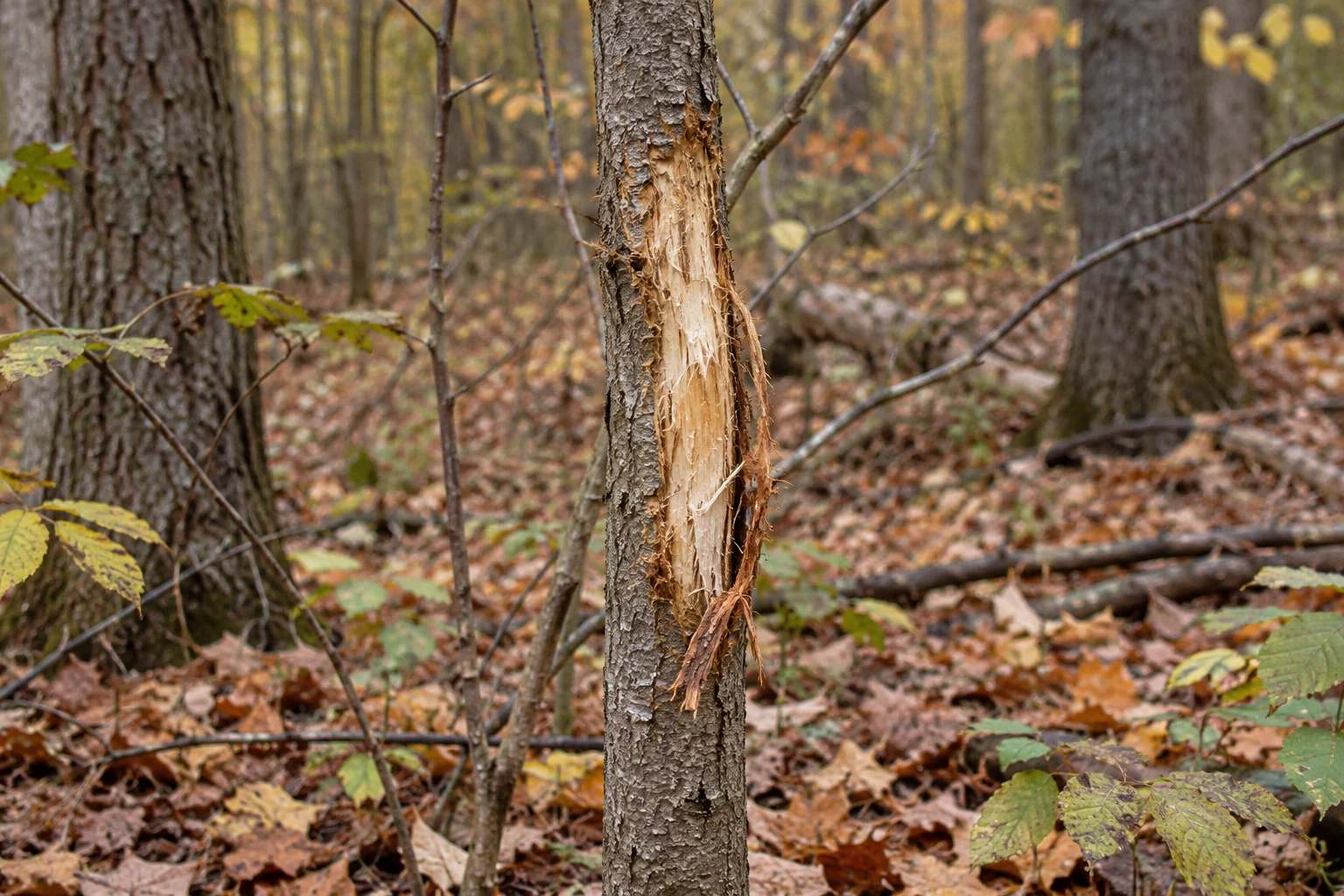
A buck rubbing its antlers against a shrub or small tree can scrape away bark and expose lighter wood. Look for a rubbed patch on a standing stem; nearby tracks may help support the identification.
What it cannot tell you: Bark damage has other causes, including tools and other animals. A rub does not reveal the buck’s exact age or antler size, and it does not mean a deer is currently nearby.
Scrapes: disturbed ground beneath a branch
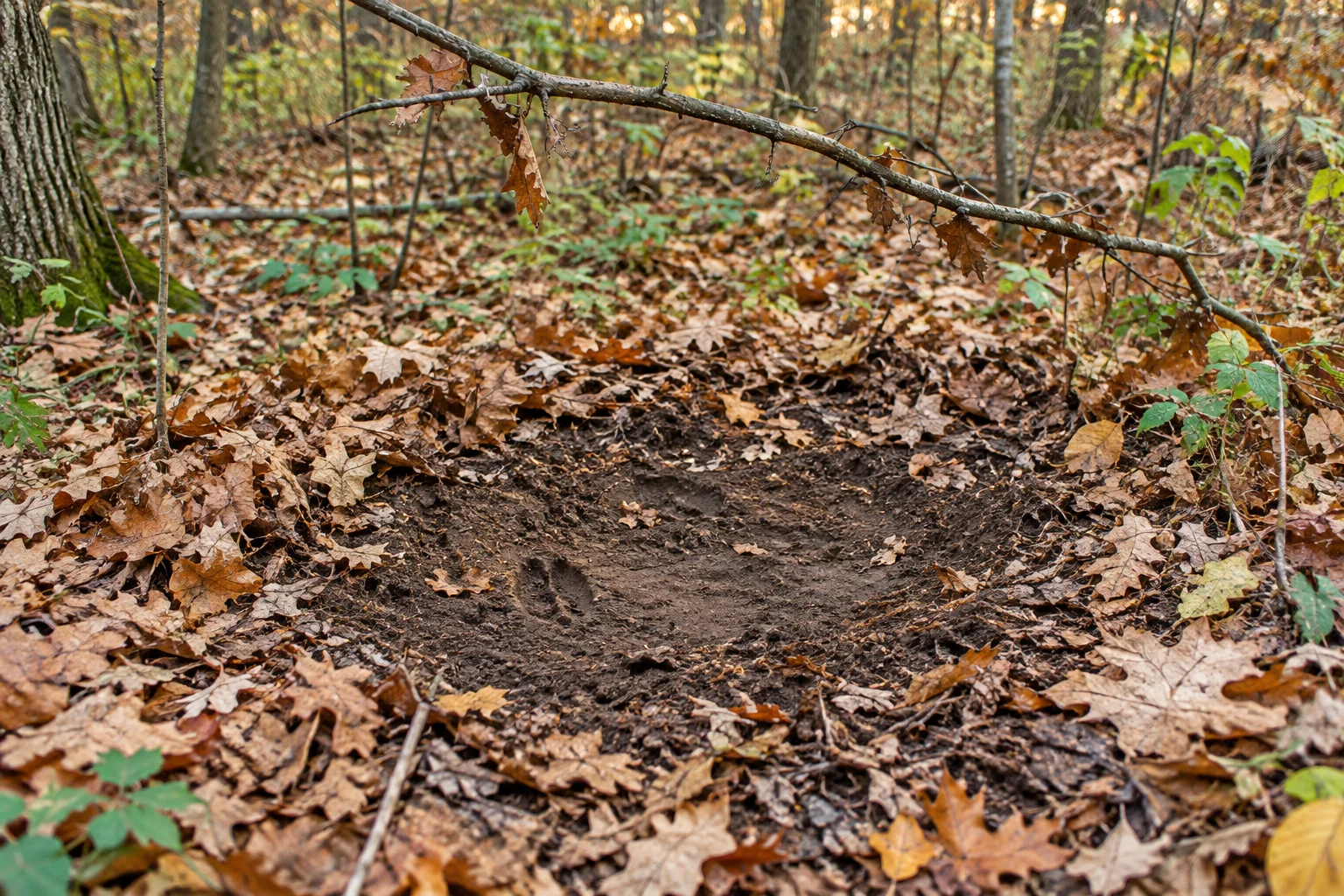
A deer scrape is a patch of ground pawed clear of leaves or other loose material, often beneath an overhanging branch. Bucks use scraping and scent marking as part of their breeding-season communication.
What it cannot tell you: Disturbed ground is not automatically a deer scrape. Look at the branch, hoof marks, surrounding habitat, and other signs together. Leave the site as you found it.
What are those spike bucks doing?
In this week’s video, the bucks briefly meet antlers and push against each other. That interaction is called sparring. Bucks can spar as they test one another and establish social relationships; every antler-to-antler exchange is not an all-out fight.
Watch for: which deer approaches, how their heads turn, when they pause, and which one steps away. Spike antlers describe an antler shape, not an exact age—do not age a deer from its antlers alone.
Build a case for a deer visit
Choose a safe spot on an established path or in your own yard. You do not need to find every sign to complete the activity.
Notes stay on this page only and are not saved. Print or save a PDF before leaving if you want to keep them.
Good watching leaves the scene intact
Give deer space, keep pets under control, and watch without feeding, approaching, or following them. Do not touch droppings or disturb rubs, scrapes, or resting places. Respect property boundaries and posted trail rules.
Sources and further reading
Missouri Department of Conservation: White-tailed Deer — hoofprints, dewclaws, rubs, scrapes, and scent communication.
Penn State Extension: White-tailed Deer — deer biology, antlers, and forest habitat.
Keep noticing
Who’s visiting your backyard at night? Explore our next guide.
Try our animal-signs field note · Meet the eastern gray squirrel · Explore more field guides