
Backyard studio gear guide
Can a Portable Power Station Run a Backyard Wildlife Studio?
How to size a battery for a laptop, lights, and camera gear before you spend money on more capacity.
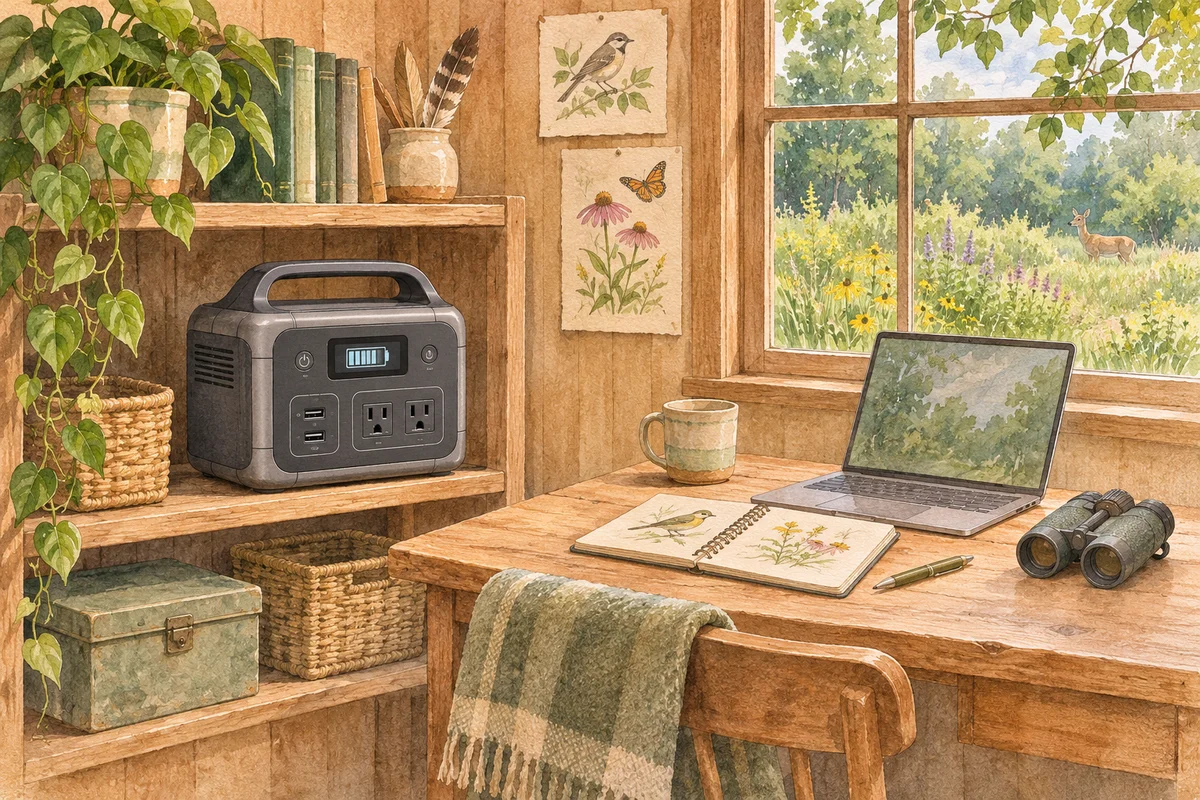
A desk lamp, laptop, and trail-camera battery charger can make an unwired backyard studio useful for an afternoon. Start by adding up what you actually plug in. That will tell you whether a battery you can carry out to the studio makes sense and how often you’ll need to bring it back to charge.
Estimate a session in watt-hours
Watts tell you how much power a device is drawing at a given moment. Watt-hours tell you how much energy it uses over time. Multiply watts by hours for each device, then add the results. These numbers illustrate the method. Measure your own gear with a plug-in power meter where practical.
| Device | Example draw | Time in use | Energy |
|---|---|---|---|
| Laptop | 45 W | 4 hours | 180 Wh |
| LED task lamp | 10 W | 4 hours | 40 Wh |
| Camera battery charger | 15 W | 2 hours | 30 Wh |
| Session total before losses | 250 Wh |
Allow room for conversion losses, power the station uses while its AC outlets are on, and days when you work longer than planned. Also check the maximum watts your devices draw together against the station’s continuous output and individual outlet ratings. A large output number tells you what can run at once. The battery’s capacity helps estimate how long it can run.
Compare two sizes
| Model | Rated capacity | Continuous AC output | Where it fits |
|---|---|---|---|
| Anker SOLIX C1000 Gen 2 | 1,024 Wh | 2,000 W | More than the example desk session needs on paper. Consider it if you want extra time between charges or regularly bring the station inside. |
| EcoFlow DELTA 3 Max Plus | 2,048 Wh | 3,000 W | Consider it for longer sessions or more gear once you’ve measured demand. It weighs about 49 lb, so think about where you’ll charge it. |
Anker specifications · EcoFlow specifications
Try the math on heat before you size the battery. A heater drawing 1,500 W continuously would use 1,500 Wh in an hour, six times the example desk session. For regular heating, cooling, or permanent outlets, discuss the studio’s electrical needs with a qualified electrician.
Decide how you’ll recharge
If you work in the studio a few afternoons a week, bringing the battery indoors to recharge may be straightforward. If you plan to work there most days, look at how much sun the site actually gets, including when nearby trees shade it. A panel’s rated wattage describes its output under test conditions. Cloud cover, shade, and panel placement affect how much energy reaches the station. Check panel compatibility and input limits in the manual before purchasing.
Use the station in a dry, ventilated location and follow the manufacturer’s operating and charging temperature limits. Plug compatible devices directly into the station’s built-in outlets. Have an electrician handle any connection to building wiring. EcoFlow operating and safety instructions
Start with your smallest practical setup
Measure a normal afternoon of work. If it looks like the example above, compare a smaller battery before spending on a 2 kWh unit. If you’ll be powering a larger setup for longer stretches, budget for the extra capacity and decide how you’ll replenish it on a cloudy week.
As an Amazon Associate I earn from qualifying purchases.