
Backyard habitat field guide
How to Build a Backyard Wildlife Habitat You Can Watch From Your Window
Plan a small native planting bed you can watch from indoors, choose plants for your site, and make the viewing window safer for birds.
Wild Notebook · November 13, 2026
Pick the window you actually look out of. It might be beside the desk in your new studio, over the kitchen sink, or next to the chair where you drink your morning coffee. A small habitat patch in that view gives you somewhere to watch for bees working the flowers, birds checking the seed heads, or the first insects out on a warm spring day.
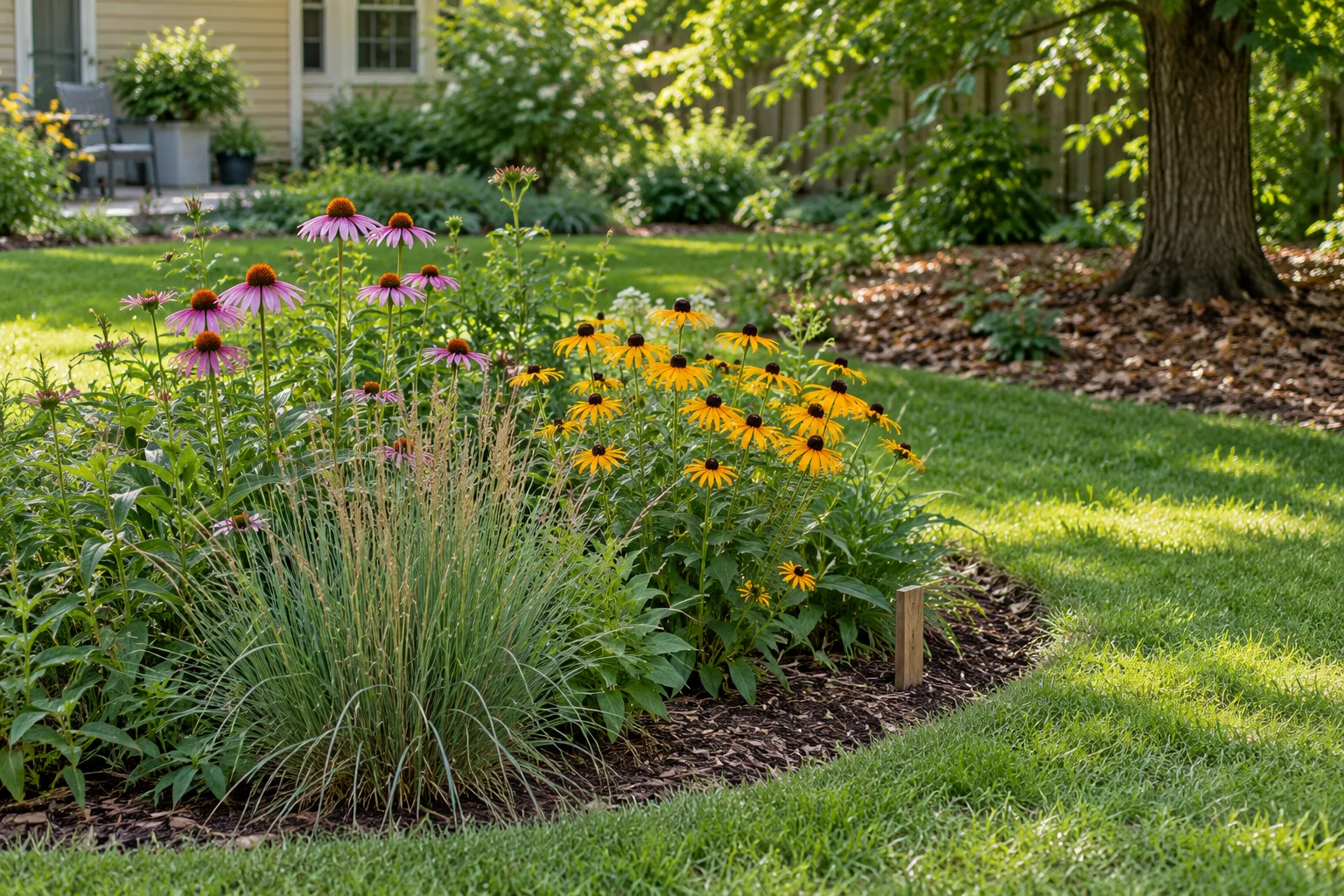
Choose one spot you can see and care for
Sit where you’ll watch, then mark an area you can see clearly. Go outside and note what is already there. An established shrub or woodland edge may be the best place to build around. Check direct sun at several times of day, and look again after rain to see where water collects or drains quickly. Leave room for paths, mowing, and access to the building.
Keep the first patch small enough to water and weed without stepping into it. If you’re still planning a new studio, sketch the access route first and put the habitat patch outside the area the delivery crew needs. Read the prefab wildlife studio buyer’s guide.
Choose plants by the jobs they do
Start with a few species native to your area that fit the site’s light, moisture, and available space. Look for flowers that bloom at different times, plants with seed heads you can leave standing, and cover such as a native grass or a shrub sized for the site. Check the mature width before buying. Audubon’s native plant finder is a starting point for choosing plants by ZIP code.
A simple layout to sketch
- Near edge: Put lower plants here so you can see the rest of the bed.
- Middle: Group flowering plants where you’ll be able to see insects working the blooms. Choose a mix with staggered flowering times.
- Far edge: Keep existing cover where it fits, or add taller native grasses or a compact native shrub if the mature size works.
If the site is shaded, keep the same layout and choose woodland-edge plants suited to the available light. If you have a patio and can use containers, choose plants for the light and moisture you can realistically maintain in pots.
Make the viewing window safer for birds
Step outside and look at the window from several angles. Can you see a reflection of trees or sky? Can you see straight through to another window? Treat large reflective panes and glass doors before drawing more bird activity to that view. American Bird Conservancy recommends exterior screens or a pattern on the outside of the glass with gaps no larger than two inches. Cover the whole pane. See American Bird Conservancy’s home window solutions.
Watch what changes
Spend five minutes at the window once a week. Write down what’s blooming and what you see using it. “Small bee on the yellow flowers” is enough to start. A few weeks of notes can show you when the bed has a gap in bloom or which spot dries out first. Use those observations to decide what to add next.
Plan your first patch
Use the free worksheet to mark your viewing spot, describe the site, and choose one project you can keep up with.
Build beyond the first patch
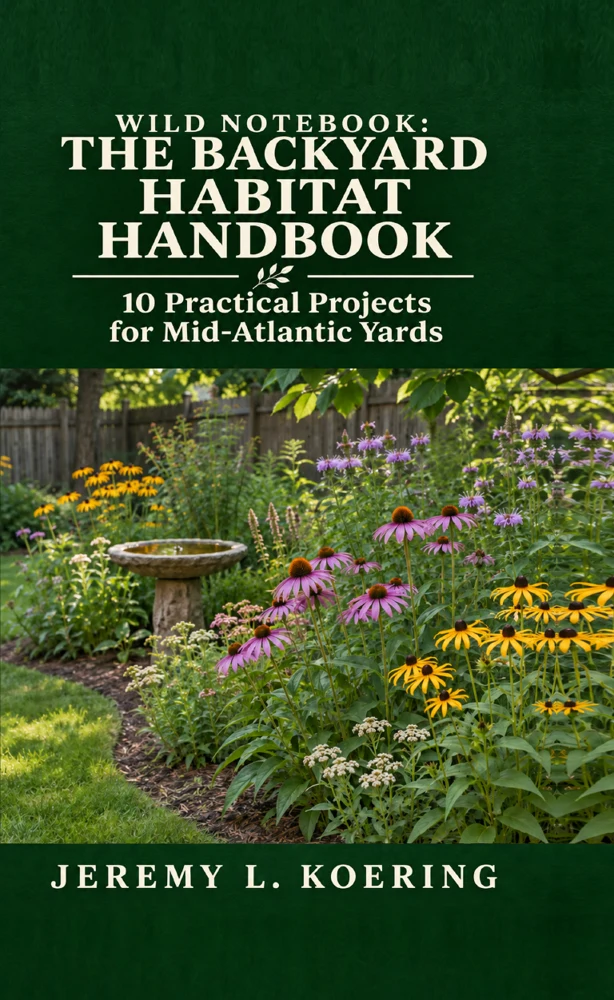
Wild Notebook: The Backyard Habitat Handbook by Jeremy L. Koering has ten practical projects for Mid-Atlantic yards. Start with the sunny starter bed, dry-site strip, moist-soil patch, or woodland-edge shade bed, depending on what you saw from your window. The book also covers native containers, shrub borders, and how to care for the habitat as it grows.
As an Amazon Associate I earn from qualifying purchases.